Chlorine Gas Leak Detection and Emergency Shutoff: What the Standards Require
The 2022 water works standard is specific about detectors, alarms, ventilation and shutoff, and a small plant can meet it with a short list of equipment. The part that slips is upkeep.

Key Insight
Where pressurized chlorine gas is present, the 2022 water works standard requires continuous leak detection with an alarm, and it recommends automatic shutoff where a leak could reach the surrounding area. Detectors need routine testing to mean anything.
Which standard, and who uses it
The usual baseline for a gas chlorine room is a document whose subtitle says what it is for: policies for the review and approval of plans and specifications for public water supplies. It is the Recommended Standards for Water Works, 2022 edition, usually called Ten States Standards. A board of state and provincial health and environmental managers writes it, and its members include Ohio and Pennsylvania. Pennsylvania DEP hosts the 2022 edition with its public water supply permit documents, which makes it familiar ground for plants we support around Pittsburgh.
Your permit and your state reviewer have the final word. The standard is the baseline they read against, and it uses two kinds of language. The foreword explains that "shall" and "must" mark requirements, while "should" marks a desirable practice, with deviations subject to individual consideration. That difference matters in the shutoff section below.
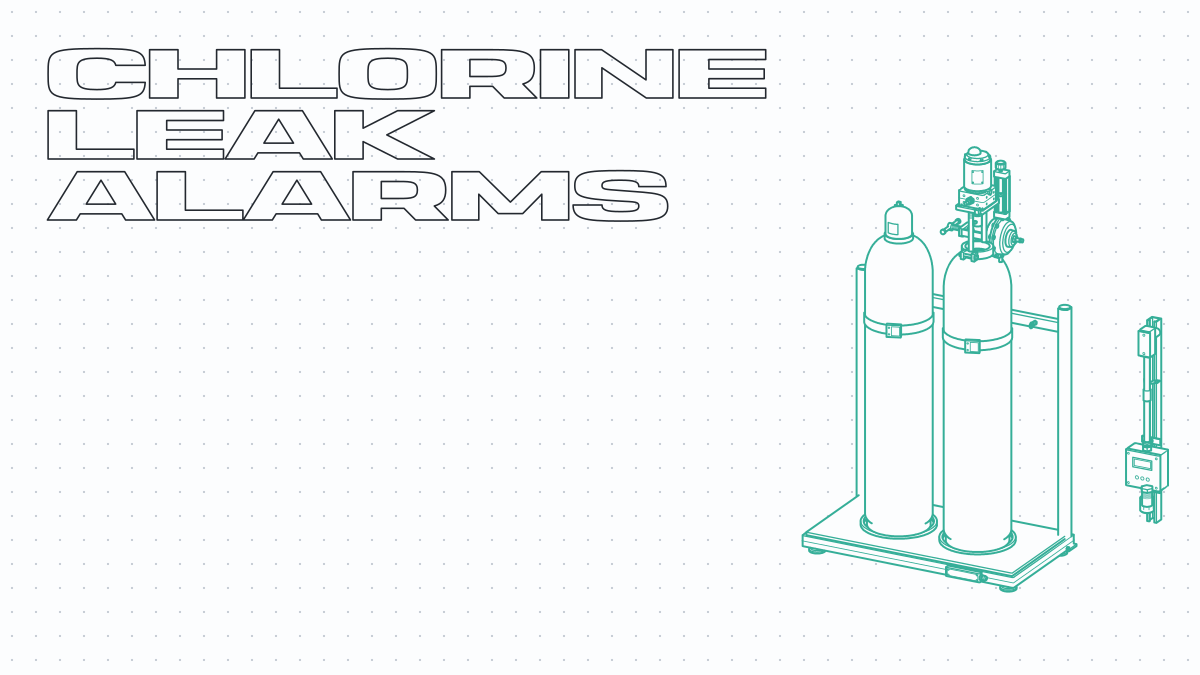
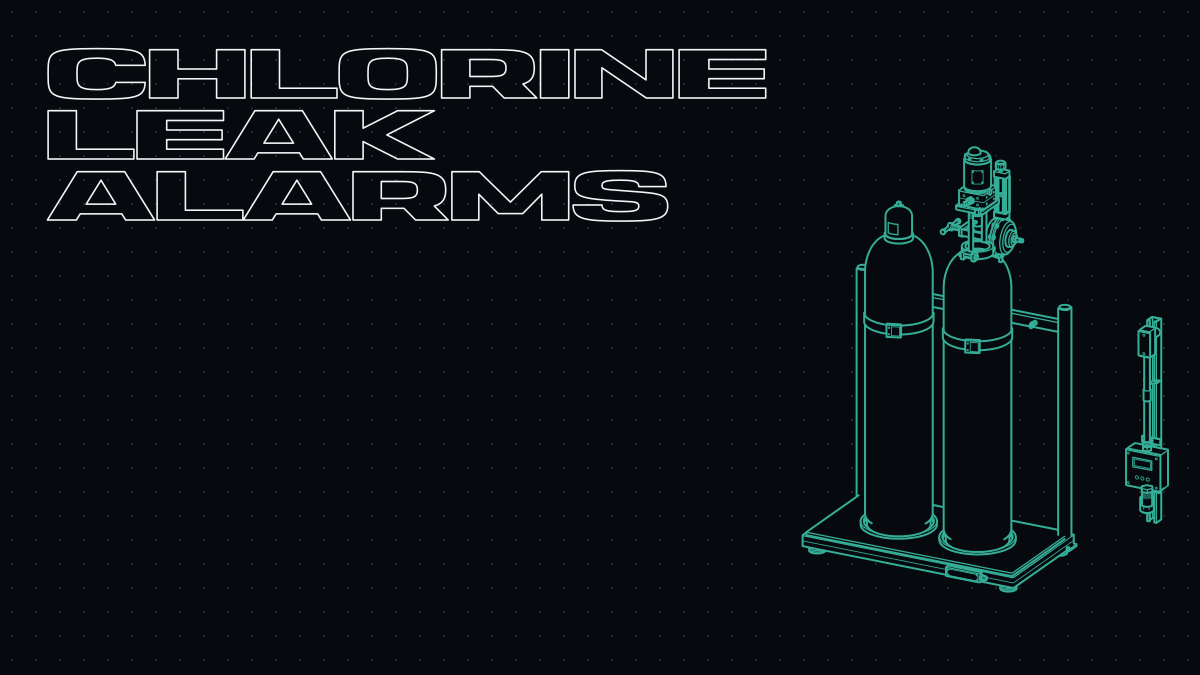
The equipment list is short: a leak detector with a horn and a light, and on some sites an automatic shutoff on the cylinders. A vacuum alarm on the feed covers a different failure, described at the end. Our Superior gas disinfection page lists the SLD Series detectors, the VAS-4 vacuum alarm switch and the Safe-T-Close emergency shutoff we install and service.
Leak detection: what section 5.7.3 says
Section 5.7.3 is short, and it has three parts. First, a bottle of concentrated ammonium hydroxide, a 56 percent ammonia solution, must be on hand for finding leaks. PA DEP's operator training workbook describes the test: ammonia vapor reacts with chlorine gas to make a visible white cloud, and only vapor should be dispensed, never the liquid.
Second, where ton containers are used, the plant must have a leak repair kit approved by the Chlorine Institute. The same workbook names the kit sizes by container, with Kit B for one-ton containers.
Third, and most important: where pressurized chlorine gas is present, "continuous chlorine leak detection equipment is required." It must have both an audible alarm and a warning light. The words that matter are continuous and both: a portable meter carried in during rounds does not meet the sentence, and neither does a horn with no light.
The section just before it, 5.7.2, covers the people who answer that alarm. Respiratory protection meeting NIOSH requirements must be available where chlorine gas is handled, stored in a convenient heated location outside any room where chlorine is used or stored. The units use compressed air, have at least a 30-minute capacity, and match or work with those of the fire department that serves the plant.
The room itself
Section 5.8.1 sets out the room. The chlorinators should sit in a room separate from, but next to, the cylinder storage room. Both rooms should be in a corner of the building on the prevailing downwind side, away from entrances, windows, louvers and walkways. The feed room should be heated to 60°F and protected from excessive heat.
The firm requirements come next. Feed and storage rooms shall be enclosed and separated from other operating areas, and built with:
- A shatter resistant inspection window in an interior wall, and all openings to the rest of the building sealed.
- Doors that open outward only, to the building exterior, with panic hardware.
- Ventilation large enough for one air change per minute when the room is occupied. A lesser rate may be considered where the room size makes that inappropriate.
- Fan suction near the floor, far from the door and air inlet, with a screened discharge outside the building above grade, away from air inlets and walkways. Airtight inlets with corrosion resistant louvers go near the ceiling.
- Separate switches for the fans and the lights, outside the room and at the inspection window, protected from vandalism. Where the fans can be controlled from more than one point, a signal light at each entrance shows that they are running.
- Floor drains are discouraged. Where they exist, they discharge outside and connect to no other drainage system.
- Where feed or storage is near residential or developed areas, a way to neutralize or contain chlorine gas after a measured release, sized for the full contents of the largest container in service, or another measure the reviewing authority approves.
The floor-level suction follows from the chemistry. Chlorine gas is about 2.5 times heavier than air and stays in low spots, as the PA DEP workbook puts it.
Automatic shutoff: a should, with a condition
Item 10 of section 5.8.1(d) covers automatic shut-off devices on in-service cylinders. They should be installed "when impacts of a chlorine leak to the surrounding area are possible." The devices close the container valve itself, which stops gas flow through the feed line. They may be triggered remotely, by pressure-sensing switches, or by the chlorine gas detection system. Installing one should not get in the way of closing the valve by hand, and it should not call for any tool beyond the standard cylinder wrench.
Note the word. This is a recommendation, and whether impacts are possible at a given site is a judgment the reviewing authority makes with the plant's engineer. Item 9 points the same way, tying neutralization to rooms near residential or developed areas. When the answer is yes, a common pairing is a shutoff actuator on each in-service cylinder, wired to the leak detector and to a remote shutoff switch outside the gas room.
What the alarm points are based on
Two federal reference values sit behind chlorine alarm settings. The NIOSH Pocket Guide lists OSHA's permissible exposure limit for chlorine as a ceiling of 1 ppm, and lists 10 ppm as immediately dangerous to life or health.
The standard does not set alarm setpoints. The detector manufacturer and the plant's safety plan set them. Detectors with two alarm levels, like the SLD Series, let a plant separate an early warning from a full alarm and decide in advance who responds to each.
When federal chemical accident rules apply
Chlorine is on EPA's Risk Management Program list. 40 CFR 68.130 sets its threshold quantity at 2,500 pounds. A ton container holds 2,000 pounds, so a plant that keeps one ton container in service and a full one waiting can pass that number. How Part 68 counts the quantity in a process is a question for the plant's engineer or EPA region, and worth asking before switching container sizes.
Keeping detection honest
A detector earns its place on the wall only if someone checks it. The PA DEP workbook's routine for a container storage area includes daily checks of the ventilation, a leak check at least once per shift, and a weekly check that the leak detection equipment works. Bump tests and sensor replacement follow the detector maker's manual, and each one belongs in a log with the date, the result and who did it.
A detector that has not been tested is a light on the wall.
The alarm also has to reach a person. A horn in an empty building at night reaches no one. Tying the detector and the VAS-4 vacuum alarm into remote telemetry lets an alarm call out to the operator on duty, and the callout path can be tested along with the sensor. The vacuum alarm covers the other failure: feed that stops without a leak, which shows up later as a low residual.
For background on the equipment itself, our earlier post on Superior gas disinfection equipment walks through the chlorinators, regulators and parts.

Talk to Steve Briggs, our Director of Sales Engineering. He helps plants scope leak detection, vacuum alarms and cylinder shutoff for an existing chlorine room, and plan the testing that keeps them working.
Frequently Asked Questions
Is a chlorine gas leak detector required at a water treatment plant?
Where pressurized chlorine gas is present, the 2022 Recommended Standards for Water Works, known as Ten States Standards, require continuous chlorine leak detection equipment with both an audible alarm and a warning light. Your permit and state reviewer decide how the standard applies to your plant.
Where should a chlorine gas detector sensor be mounted?
Chlorine gas is about 2.5 times heavier than air and settles in low spots, which is why the standard puts the ventilation suction near the floor. The exact sensor location and height come from the detector manufacturer's installation manual.
Is an automatic chlorine shutoff valve required?
The standard says automatic shut-off devices on in-service chlorine cylinders should be installed when a leak could affect the surrounding area. In this standard, should marks a recommended practice that the reviewing authority weighs site by site, not a blanket requirement.
How much ventilation does a chlorine room need?
The standard calls for a ventilation system able to provide one air change per minute when the room is occupied, with suction near the floor and a screened discharge outside the building above grade. A lesser rate may be considered where the size of the room makes one air change per minute inappropriate.
What chlorine level is dangerous?
OSHA's permissible exposure limit for chlorine is a ceiling of 1 ppm. NIOSH lists 10 ppm as immediately dangerous to life or health. Detector alarm setpoints come from the manufacturer and the plant's own safety plan.
When does a plant need a Risk Management Plan for chlorine?
EPA's Risk Management Program lists chlorine with a threshold quantity of 2,500 pounds in a process. A ton container holds 2,000 pounds, so a plant with two ton containers on site can pass the threshold. How Part 68 counts the quantity at your plant is worth confirming with your engineer or EPA region.
Services:
Environmental Compliance
Continuous monitoring and automated reporting to keep plants compliant
Custom Control Systems
Purpose-built control systems for efficient operation
Ready to ensure compliance and optimize your systems?
Let's discuss how our monitoring solutions can keep your operations running smoothly and meet regulatory requirements.